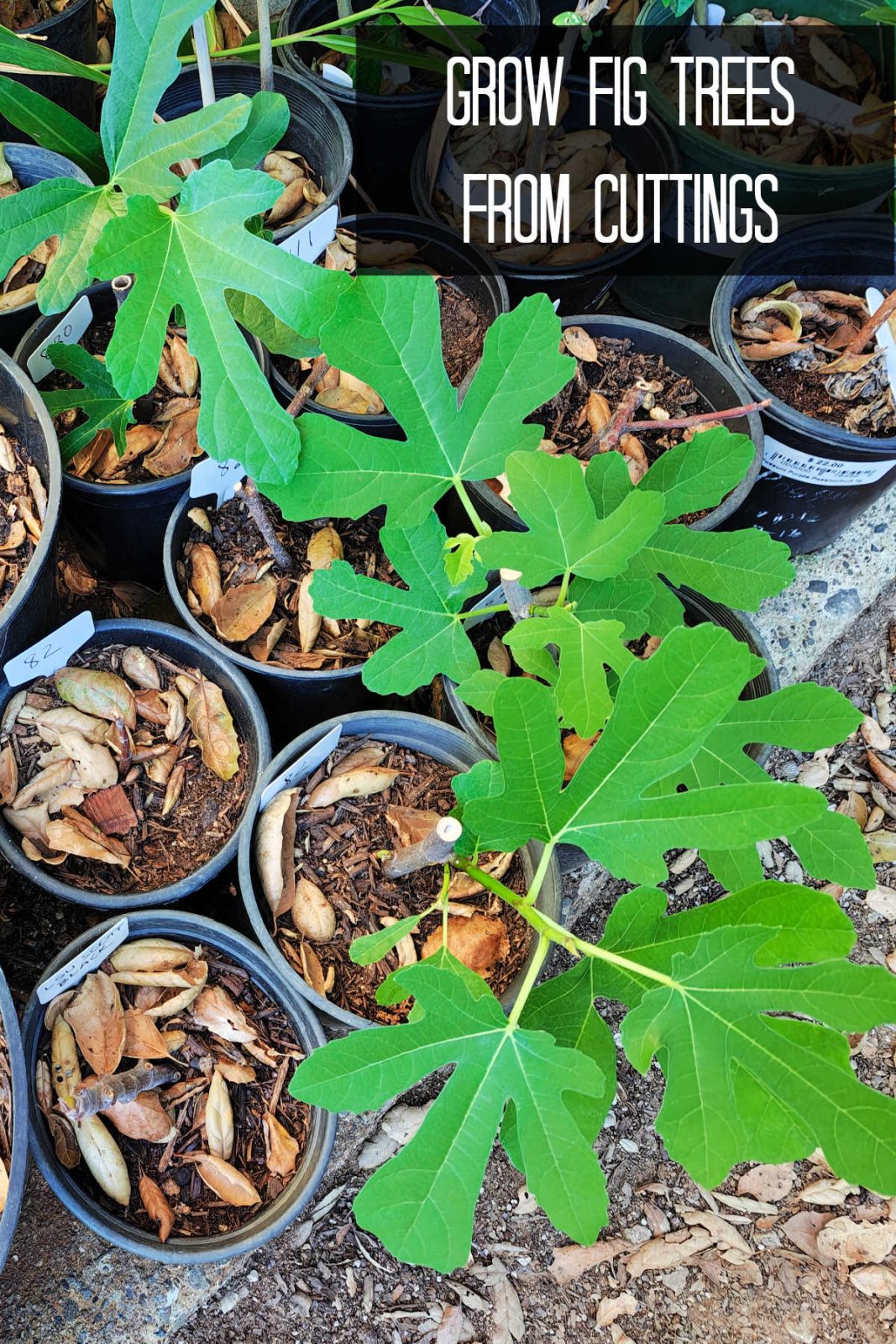
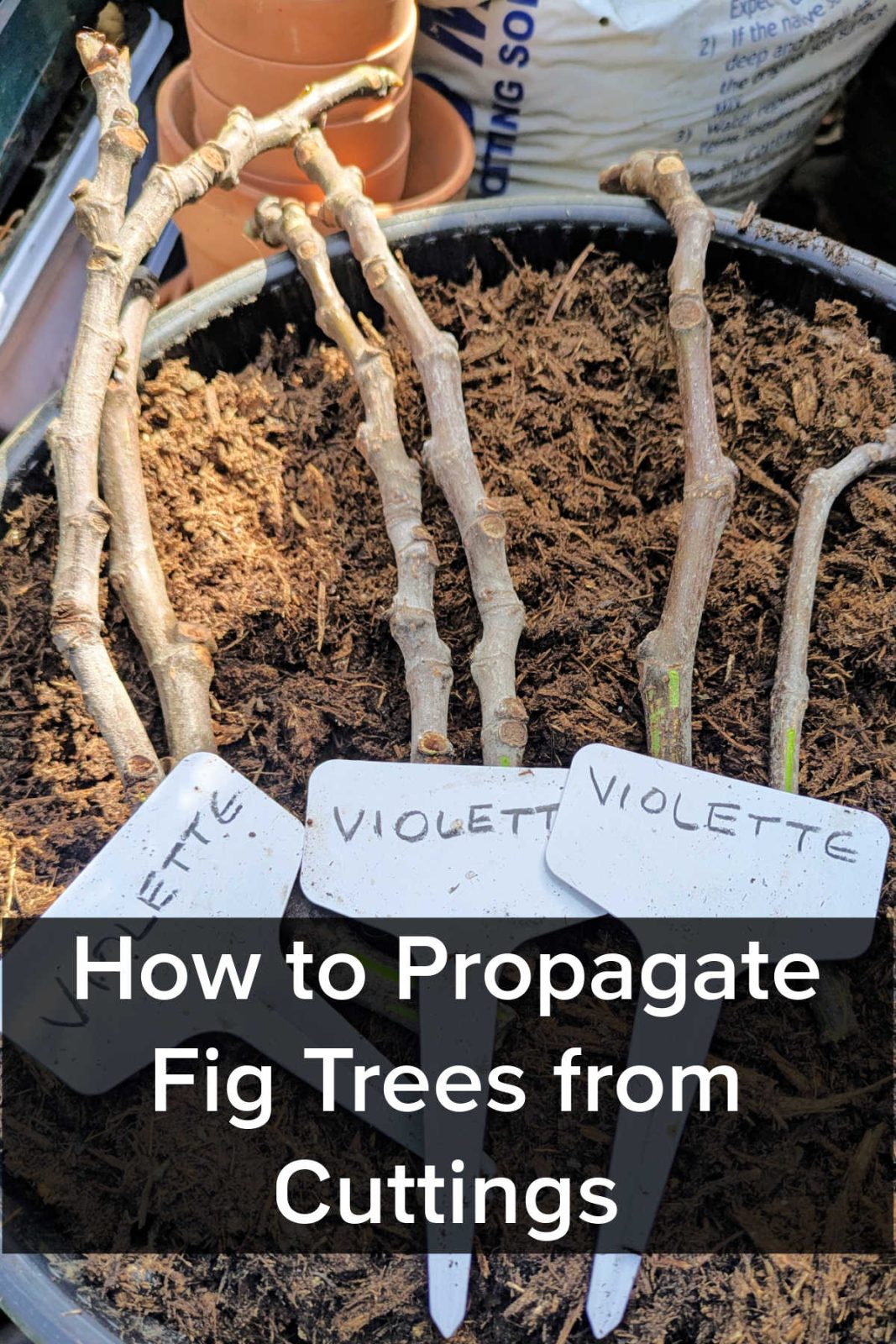
Easy Methods for Growing New Fig Trees
Learn how to easily propagate fig trees from cuttings (scions).
Discover the best rooting methods, potting tips, and climate advice for high success rates.
Propagate Fig Trees from Cuttings
When you are looking to expand your backyard orchard and want a fun, high-success project to try, rooting fig tree cuttings is a good place to start.
Figs are incredibly resilient and relatively easy to grow from a cutting (also known as a scion).
Over the years, I have successfully rooted more than 100 fig trees for my own garden and to give away to friends, neighbors, and family.
Because most fig trees produce fruit on new growth, annual pruning is an important part of maintenance.
The wonderful bonus of winter pruning is that the branches you clip away can easily be rooted to start entirely new trees! ✂️
Sourcing Your Fig Scions
You can acquire fig cuttings in a few different ways:
- Order Online: I have had good success with high-quality scions from The Fig Hunter. There are lots of other choices, too. I haven’t tried Etsy for scions, but know people who have and are happy with them.
- Prune Your Own: Use cuttings from established trees in your own yard to get a duplicate of a tree you already love.
- Share with Friends: Swap with gardening neighbors to add a new variety to your collection.
- Attend a Scion Exchange: This is one of my favorite methods. My two local California Rare Fruit Growers chapters host free scion exchange events at the beginning of the year. I have picked up some incredible, unique varieties at these events that are now thriving in my garden.
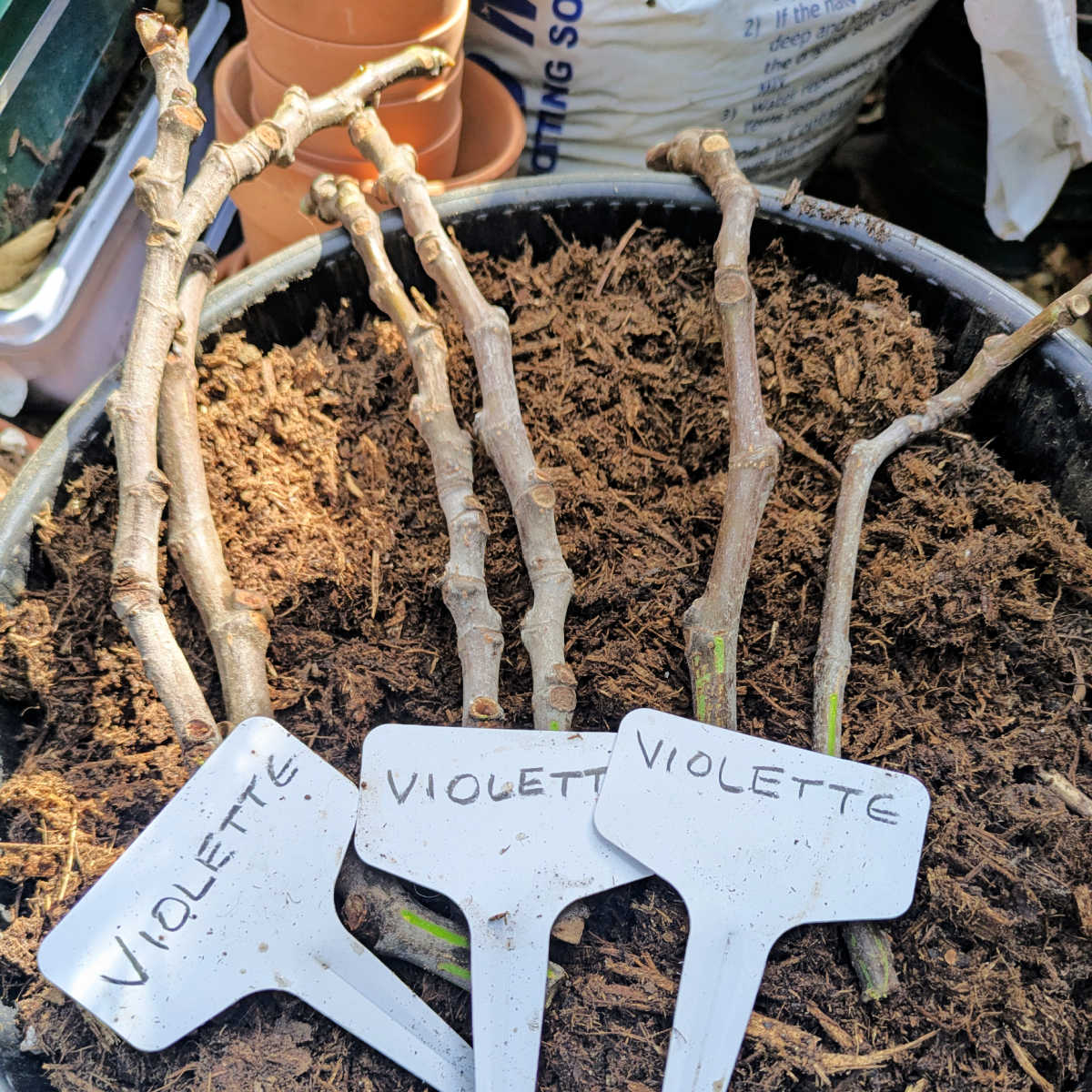
For the best results, cuttings should always be taken when the tree is dormant during the winter months when the leaves have fallen.
Ideally, look for a piece that is about 1/2-inch thick and 6 to 12 inches long, with 3 to 4 leaf nodes on it.
While that is the textbook recommendation, I have successfully rooted pieces that were thicker and thinner than that.
If you are grafting onto an existing tree, size matching is critical, but when you are rooting a scion to grow a brand-new tree on its own roots, the size isn’t quite as crucial, so try whatever you have available!
5 Easy Ways to Root Fig Cuttings
I have tested many different techniques over the years.
Here are five common methods for rooting fig scions:
- The Water Jar Method: Simply place the cutting directly into a jar of fresh water.
- Scraped Bark in Water: Use a sharp knife or the edge of a pruning shear blade to gently scrape off just the very top layer of bark from the bottom couple of inches of the scion, exposing the vibrant green cambium layer below, then place it in water.
- Direct in Soil: Plant the cutting straight into a pot of moist potting mix.
- Rooting Hormone in Soil: Dip the bottom of the cutting into rooting hormone powder and plant it directly in soil.
- Scraped Bark, Hormone, and Soil: Scrape the bottom couple of inches to expose the green layer, dip it in rooting hormone, and plant it directly into a pot of soil.
Every single one of these five methods has worked for me, but the fastest results consistently come from methods 4 and 5.
If you choose to root your cuttings in a jar of water, it can be a really fun project for kids because you can see the new roots through the glass. However, water-grown roots are incredibly delicate. When you are ready to transplant them into soil, you must be extremely gentle so they don’t break off.
Do I think rooting hormone results in good roots quickly?
Do I think it helps to remove the top layer of bark?
Yes and yes.
When done side-by-side in water, I have watched roots form much faster on scraped cuttings compared to untouched ones.
That said, I have also grown plenty of healthy, robust fig trees without using any rooting hormone or scraping at all.
Any of these methods can work, so choose the one you prefer.
My personal favorite go-to technique is scoring the bark, applying hormone, and planting straight into soil in a pot. 🪴
Potting and Care Instructions
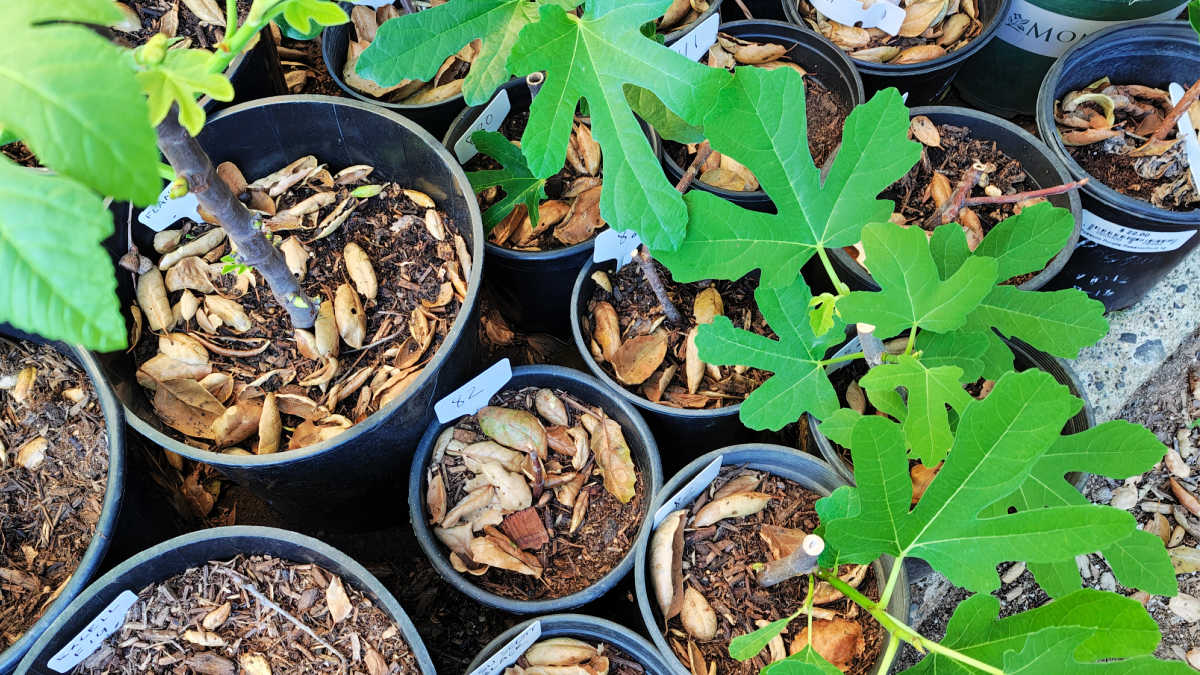
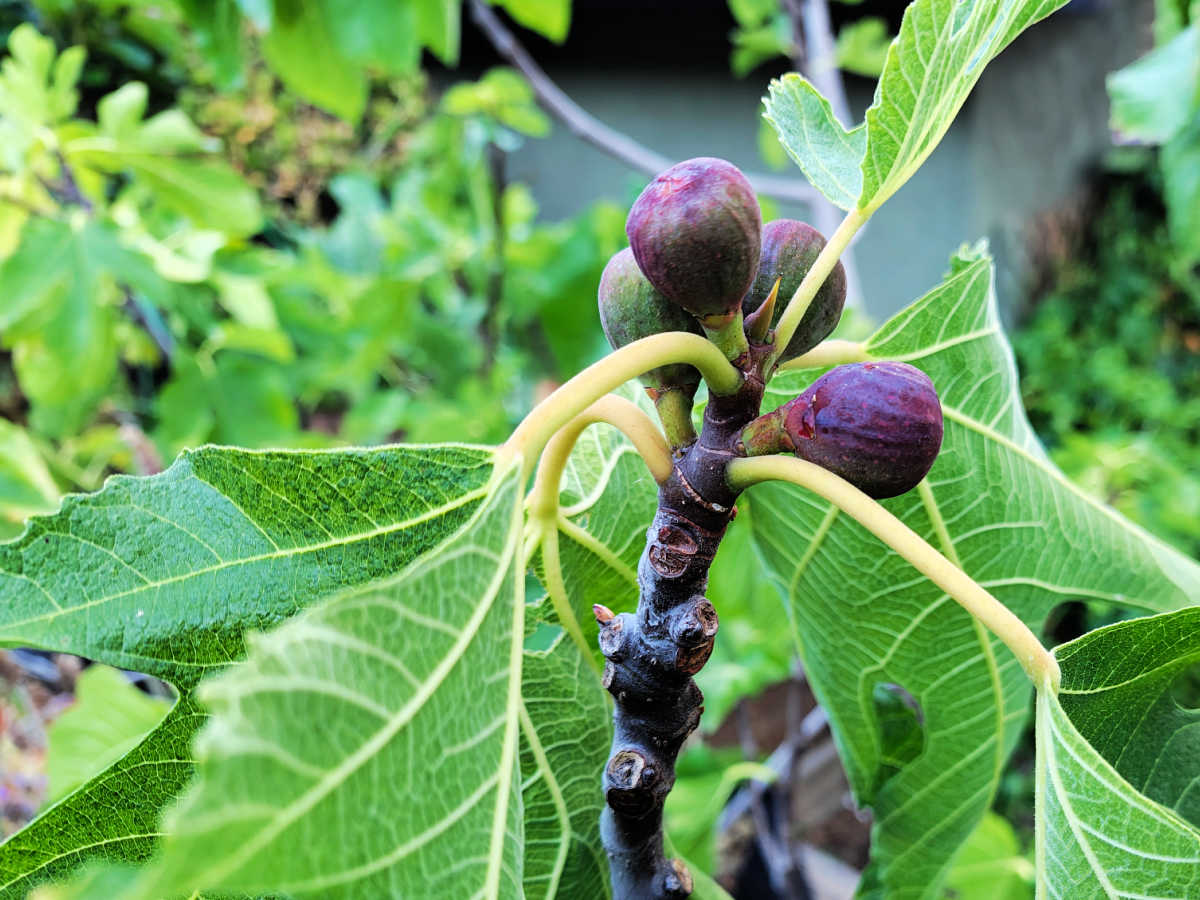
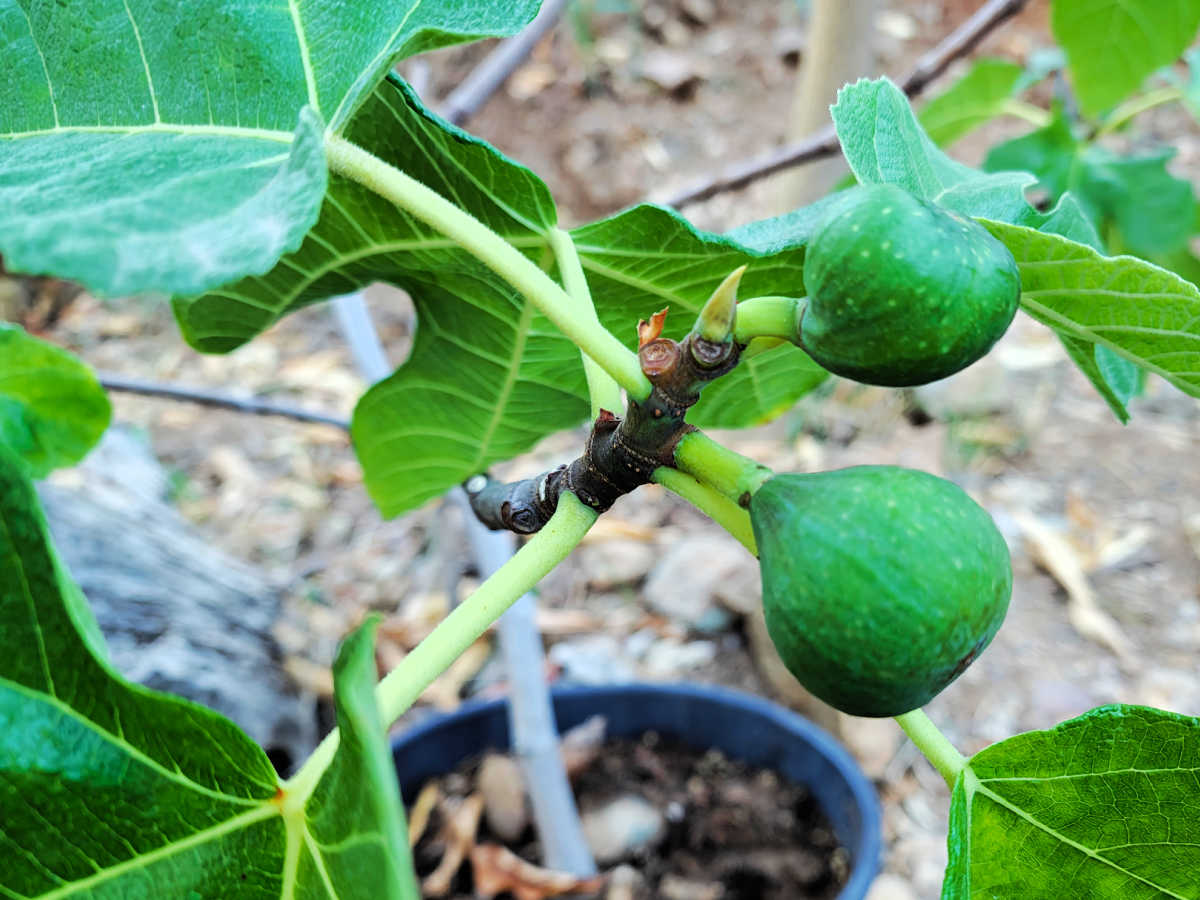
Because fig trees grow rapidly, they can expand quickly and may even give you a few fruits in their very first year.
I usually start my scions in a 1, 2, or 3-gallon nursery pot, or a tall tree pot designed for deep root growth.
Here in our hot Southern California climate, I place the newly potted cuttings outdoors in a sheltered area where they will receive filtered sunlight.
It is important to avoid harsh, direct midday sun and heavy wind while they are establishing.
Water them periodically just to keep the soil moist but not waterlogged.
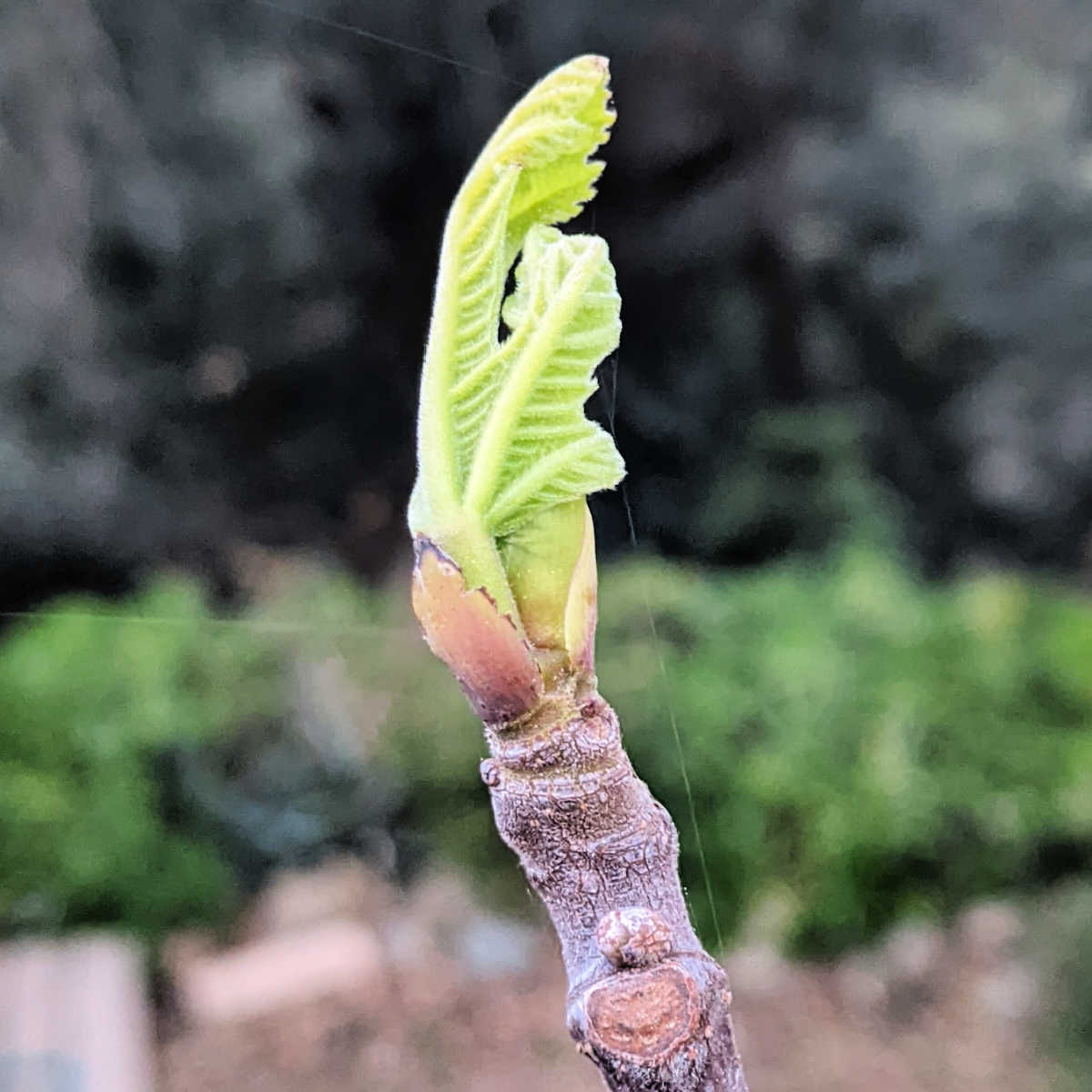
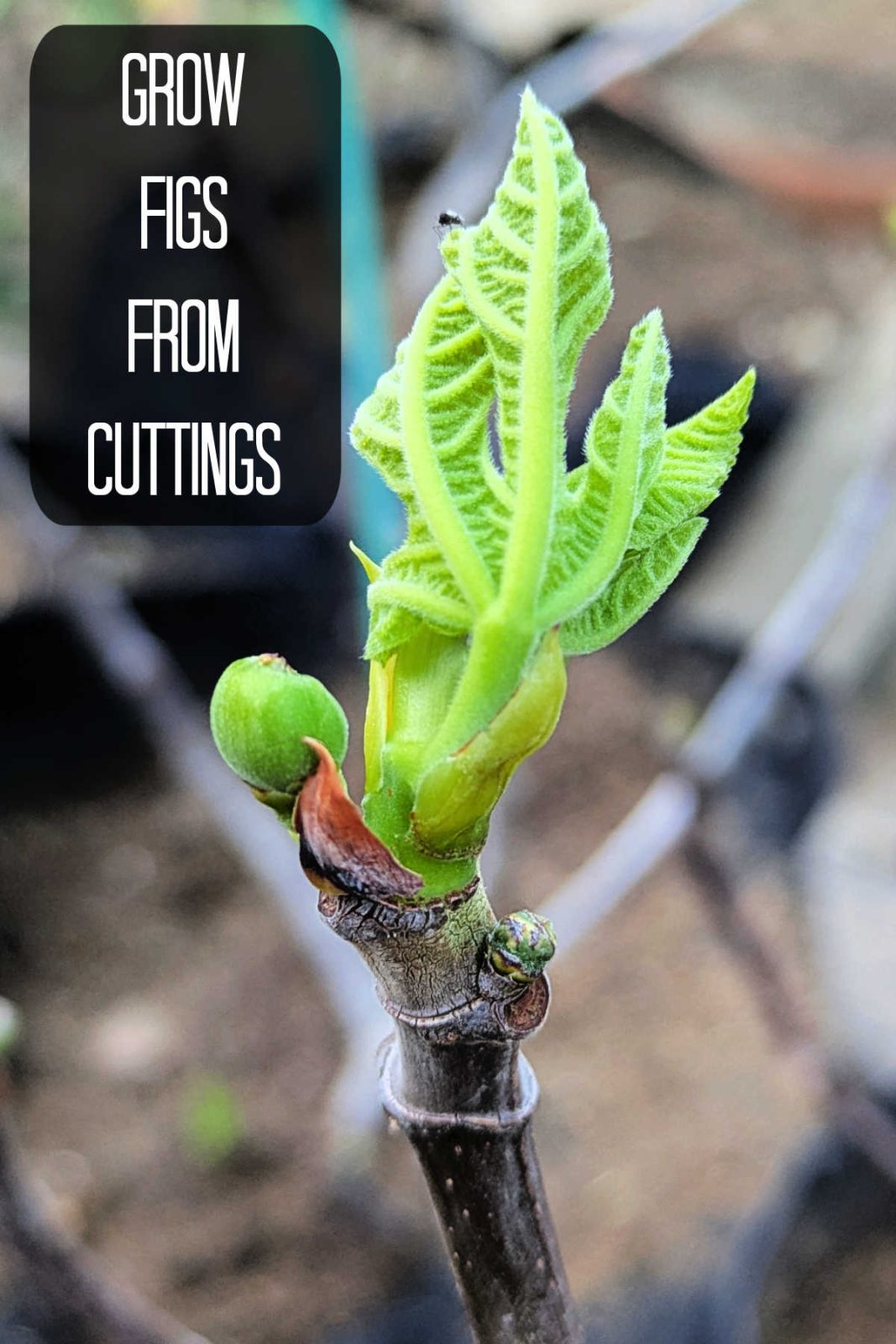
You will typically see leaf buds appear first, usually within 2 to 4 weeks, and a strong root system will be well-established within a few months. 🌞
Long-Term Planning and Container Growing
I recommend waiting until at least the second year before you consider planting a new fig tree directly into the ground.
When you are deciding on a permanent home for your tree, keep in mind that fig roots like to spread out and can be quite invasive near water lines, walkways, or foundations.
To manage this, I grow all of my figs permanently in large containers.
Keeping them in pots prevents the roots from spreading where they shouldn’t, helps control the overall size of the tree for easy maintenance, and makes harvesting a breeze.
Figs grow exceptionally well in our hot climate.
I have even successfully grown varieties that weren’t technically recommended for our zone!
If you live in a cooler region, you can easily find fantastic, cold-hardy varieties that will thrive in your climate.
Growing fruit trees from scions is rewarding, and fresh figs picked straight from the branch are an absolute joy to eat.
I grow many different varieties on my property, and if you ask me which one is my favorite, it is always whichever one I just picked! 🌳
🧺 More from Mama Likes To Cook
Fig Recipes 🩷
- Easy No Pectin Fig Jam
- White Chocolate Dipped Figs
- Cast Iron Skillet Fig Scones
- Fig and Fennel Salad with Lemon Dressing
- Blueberry & Fig Chia Pudding Cake
🗂️ The Garden Index
Southern California Zone 10B Garden 🌱
Blueberries 🫐
Coffee ☕
Figs 🩷
Peppers 🌶️🫑
Squash 🌿
Sugarcane 🤍
Tomato 🍅
Tree Collards 🥬
Garden Books 📚
- Old Farmer’s Almanac Vegetable Gardener’s Handbook
- The Productive Garden
- Ripe Tomato Revolution
- The Thrifty Gardener
What are you inspired to do today?